
Profiles · · 6 min read
Dr. Rashid Ali Khan: the sports management mind behind Milan Icons
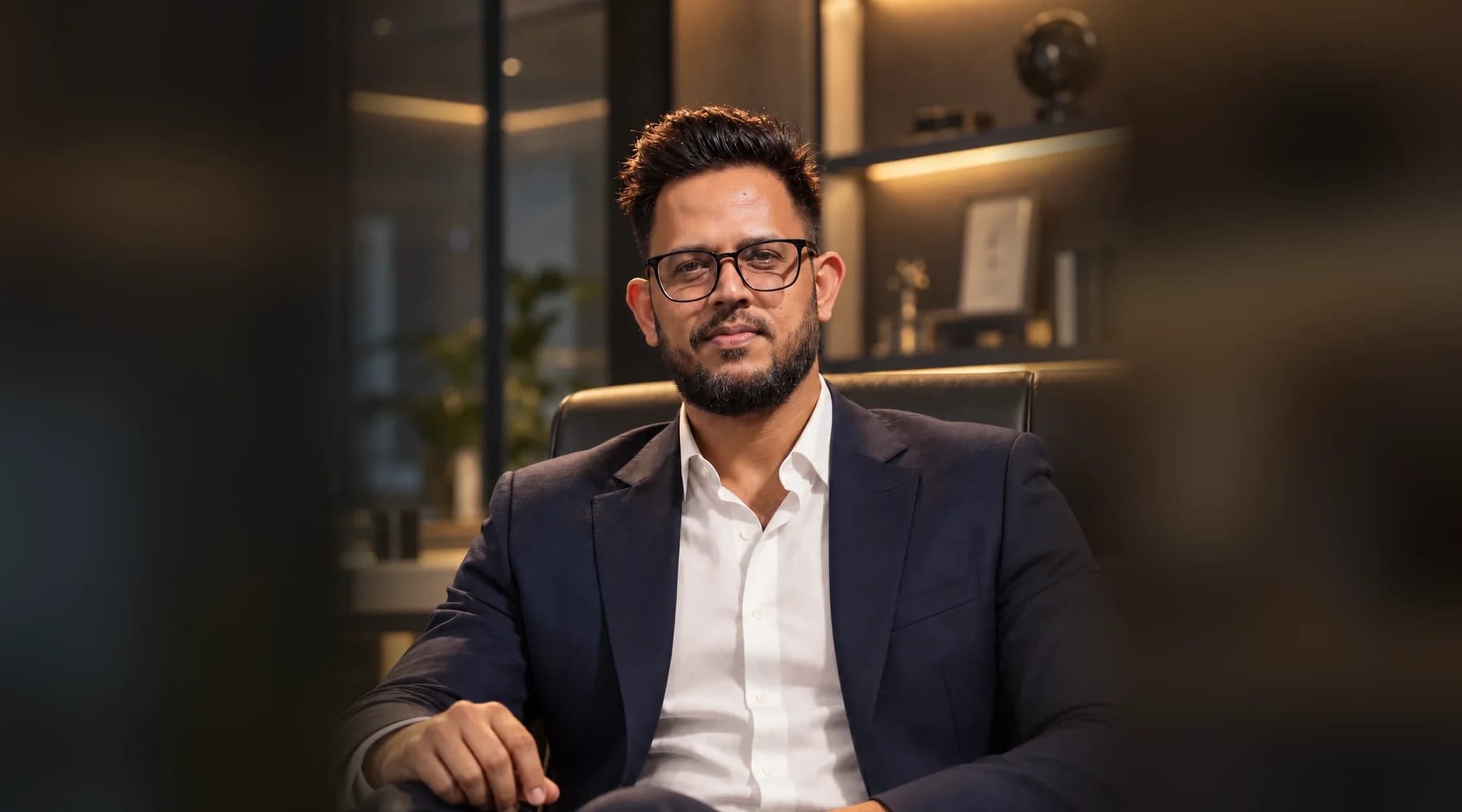
A sports franchise is judged on the field, but it is built off it. Before a team can walk out, someone has to decide what it stands for, who it plays with, where it plays and how it pays its way. Understanding the people who take those decisions tells you a great deal about what a franchise is likely to become. At Milan Icons, one of those people is Dr. Rashid Ali Khan.
He is not to be confused with the Afghan cricketer Rashid Khan. Dr. Rashid Ali Khan is a sports-business figure: the Founder and CEO of Significant Group, and a co-founder of Milan Icons.
Who is Dr. Rashid Ali Khan?
His career sits in sports management and execution: the work of turning athletes, competitions and venues into functioning, commercially viable sport. Significant Sports & Entertainment, the sports arm of Significant Group, was founded in 2011 under his leadership, and the organisation describes more than fifteen years of work across sport and entertainment since then.
What makes the profile unusual is its breadth. Many people in the sports business specialise: an agent works with athletes, an events company delivers matchdays, a venue operator runs a stadium. The organisation he leads has worked across all of those, which means his experience covers the whole chain that a new franchise depends on.
Building Significant Sports & Entertainment
Significant Sports & Entertainment describes itself as a sports management and execution company. Its starting proposition is that sport is not only about competition; it is an ecosystem of athletes, teams, venues, infrastructure, audiences, partners and experiences. The company was built to work across that ecosystem rather than one corner of it.
It organises that work into six areas: athletes, leagues, events, venues, infrastructure and intellectual property. Around them sit supporting services: grassroots development, and sports nutrition and physiotherapy for athlete performance. The company’s own summary of its role is short: it builds what happens around the game.
From the start the business has been guided by a three-part philosophy of People, Product and Profit: athletes, talent, employees and customers first; delivery that turns a plan into something real; and outcomes that are measurable and sustainable. Its stated vision is to be a global leader in sports management, recognised for excellence, innovation and integrity.
A career across the sports ecosystem
The organisation’s documented history shows how wide that ecosystem is. Its timeline runs from 2011, the year it was founded and the year of its work around the Indian Premier League and Kings XI Punjab, through the Indian Super League and Pro-Kabaddi in 2014, the Celebrity Cricket League in 2015, the Kumite 1 League in 2018 and the Arunachal Premier League in 2024.
Each of those properties asks different things of the people behind it. A franchise cricket league is shaped by squads, broadcast windows and travel. A new football league in a cricket-first market needs venues that may not yet exist. Kabaddi is built for fast, studio-friendly television. The common thread is execution: making a competition work on the day, season after season.
The company’s venue work makes that concrete. For the Indian Super League in 2014, Pune’s Balewadi Stadium was converted from an athletic ground into a football-specific venue. At Lucknow’s Ekana Stadium, its documented role ran from conceptualisation through execution. Alongside sport, its event history includes entertainment properties such as IIFA, the Filmfare Awards, Tomorrowland and Global Citizen. That is useful context, because crowd management, staging, partners and hospitality are the same problems whether the headline act is a batting line-up or a performer.
Athlete management and long-term sports careers
Athlete management is a central part of the business. Significant Sports frames it as a long-term career-support function rather than a single transaction: handling the commercial, contractual and brand-related side of an athlete’s career so that the athlete can stay focused on performance. In the company’s own words, it handles the business and the athletes handle the game.
- Contract negotiations
- Endorsements
- Brand management
- Career support
- Personalised athlete planning
The approach adapts to different sports, each with its own commercial cycles and performance demands. The Significant Sports platform documents thirteen athletes across cricket, boxing and shooting, among them M.S. Dhoni, Mary Kom, Gagan Narang, Michael Clarke, Vijender Singh and Suresh Raina. These are athletes documented in the company’s profile; the platform presents them as part of the organisation’s athlete-management experience rather than as personal clients of any one individual.
For a franchise, that experience is directly relevant. Recruiting and looking after players, especially international players arriving in a new league and a new country, depends on understanding contracts, commitments and what a professional athlete needs around the game.
Building leagues, franchises and sports IP
The second strand of the business is building competitions. Significant Sports treats league structuring as an end-to-end discipline: formats, schedules, rules, team drafting, player registration, fixtures and the operational frameworks that hold a league together. A league, in that view, is not just a competition but a complete sporting ecosystem.
The company also develops and runs its own properties. Its cricket portfolio includes Gaya Gladiators, a franchise in the Bihar Cricket League that is owned by Significant Group through Significant Sports; Global Legends 60, a 60-ball format featuring legendary players; and the T10 Super Tennis Cricket League, a tennis-ball cricket IP. Siang Sharks is a grassroots franchise IP built to give young athletes a platform, and the wider portfolio extends into music and culture.
Owning properties changes how an organisation thinks about sport. It is no longer enough to deliver an event; the question becomes how a team or competition builds a following, earns partners and lasts. That is precisely the question every new franchise has to answer.
The scale behind the organisation
Significant Sports summarises its own footprint in a handful of figures. They describe the organisation Dr. Rashid Ali Khan leads, rather than personal achievements:
Its project history is anchored in India, with an international presence that makes cross-border work, such as a cricket franchise in Italy, a natural extension rather than a leap.
From sports management to Milan Icons
Seen against that background, Milan Icons draws on almost every part of the experience described above. A new franchise needs an identity and a commercial model, players and the people who look after them, an understanding of how a league is structured, and the ability to make matchdays work. It also needs patience: building a following in a country where cricket is still growing is a long-term project.
That is the experience Dr. Rashid Ali Khan brings to the franchise: sports management, business and execution, gathered across athletes, leagues, events, venues and sports IP. Significant Sports & Entertainment owns and operates Milan Icons, and you can read more about the company on the About Milan Icons page.
The vision behind Milan Icons
Milan Icons is meant to feel like Milan first: a cricket franchise with the sensibility of the city’s architecture, tailoring and design, built for supporters who may be discovering the sport and for communities who have played it all their lives. The ambition is a lasting cricket identity for Milan within the wider growth of the game in Italy, which we explore in Milan Icons and the growth of cricket in Italy.
Franchises are remembered for their players and their moments. But the ones that last are usually the ones built carefully, by people who understand everything that happens around the game. That is the part of the Milan Icons story Dr. Rashid Ali Khan represents. Meet the players on the Squad page.
By Milan Icons Editorial · Updated
Back to newsRelated stories

Franchise3 min read
The story behind Significant Sports & Entertainment and Milan Icons
Founded in 2011 under Dr. Rashid Ali Khan, Significant Sports & Entertainment works from strategy to on-ground delivery. Here is how that approach shapes Milan Icons.

Team1 min read
Owais Shah named Head Coach of Milan Icons
Former England batter Owais Shah is Milan Icons’ Head Coach for Italia T10 Season 1.
Franchise1 min read
Shazi Ahmad named Chief Executive Officer of Milan Icons
Shazi Ahmad leads Milan Icons as Chief Executive Officer, overseeing the franchise’s strategy and operations as it prepares for Italia T10 Season 1.